
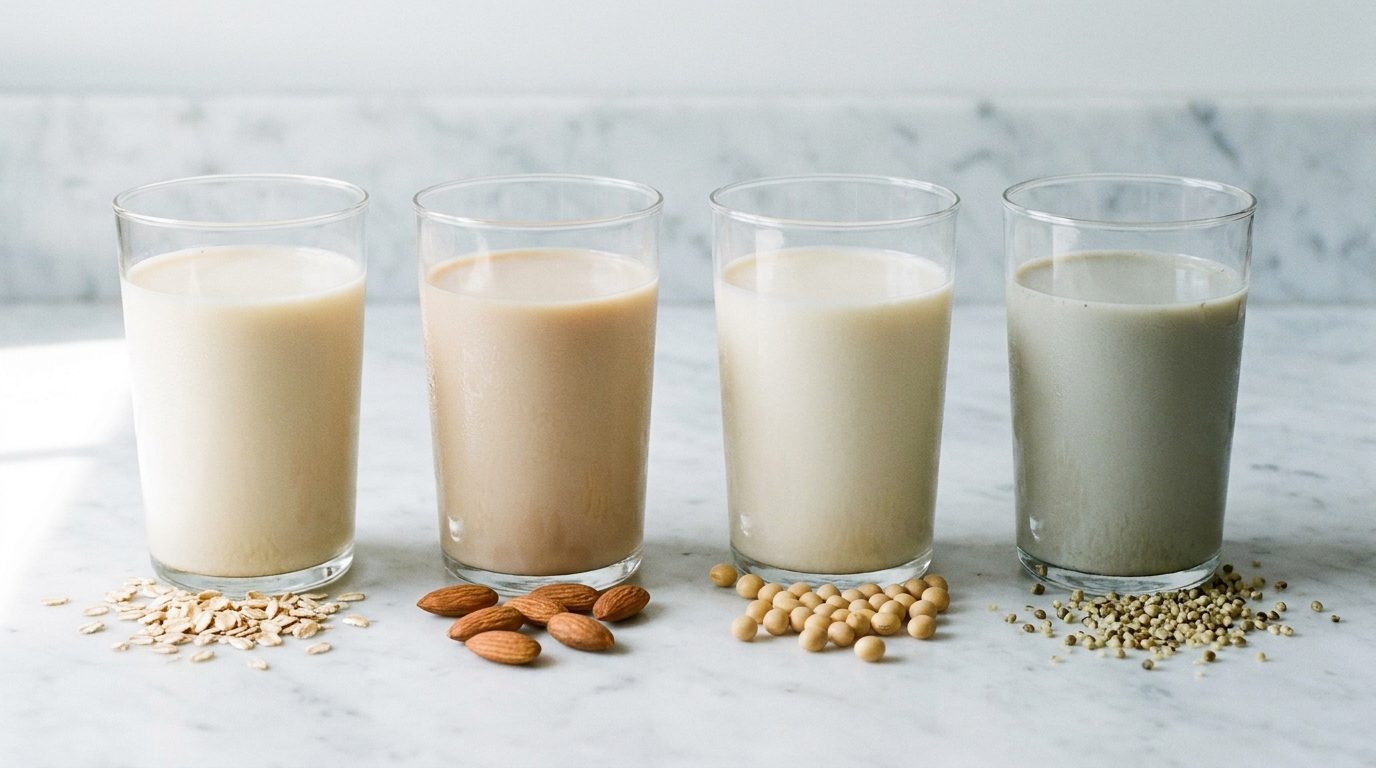
Hemp milk is the plant milk people forget, sitting in a category dominated by oat, almond, and soy. On nutrition it beats two of those three, and you can make it at home in ninety seconds without straining. Whether it is "worth it" depends on which job you need a plant milk to do.
The comparison that matters
| Per cup, typical unsweetened | Protein | Notable |
|---|---|---|
| Soy milk | 7 to 8 g | The protein benchmark among plant milks |
| Hemp milk | 2 to 4 g | Omega-3 ALA; complete protein; no common allergens |
| Oat milk | 2 to 3 g | Highest carbohydrate; best foam for coffee |
| Almond milk | about 1 g | Lowest calories; tree-nut allergen |
Commercial figures vary by brand and fortification; homemade hemp milk made rich (more hearts, less water) lands at the top of its range.
Where hemp milk wins
Allergy households first: it contains no dairy, soy, nuts, or gluten, which makes it one of the few plant milks an entire classroom can drink. It also brings omega-3 fats none of the others offer meaningfully, and its protein is complete. Flavour is nutty and slightly green, closest to a mild sunflower taste.
Where it loses
Coffee. Plain hemp milk does not foam like barista oat blends and can split in very hot, acidic coffee. It is also the most expensive of the four to buy ready-made, which is exactly why making it is the move: blend hemp hearts with water, no soaking, no straining, as in the hemp foods guide. Homemade costs a fraction of carton price and tastes fresher.
Verdict
Worth it as the household allergy-safe milk and as the easiest DIY plant milk in existence. Not worth it if your only use case is foamed lattes, where oat keeps the crown.