
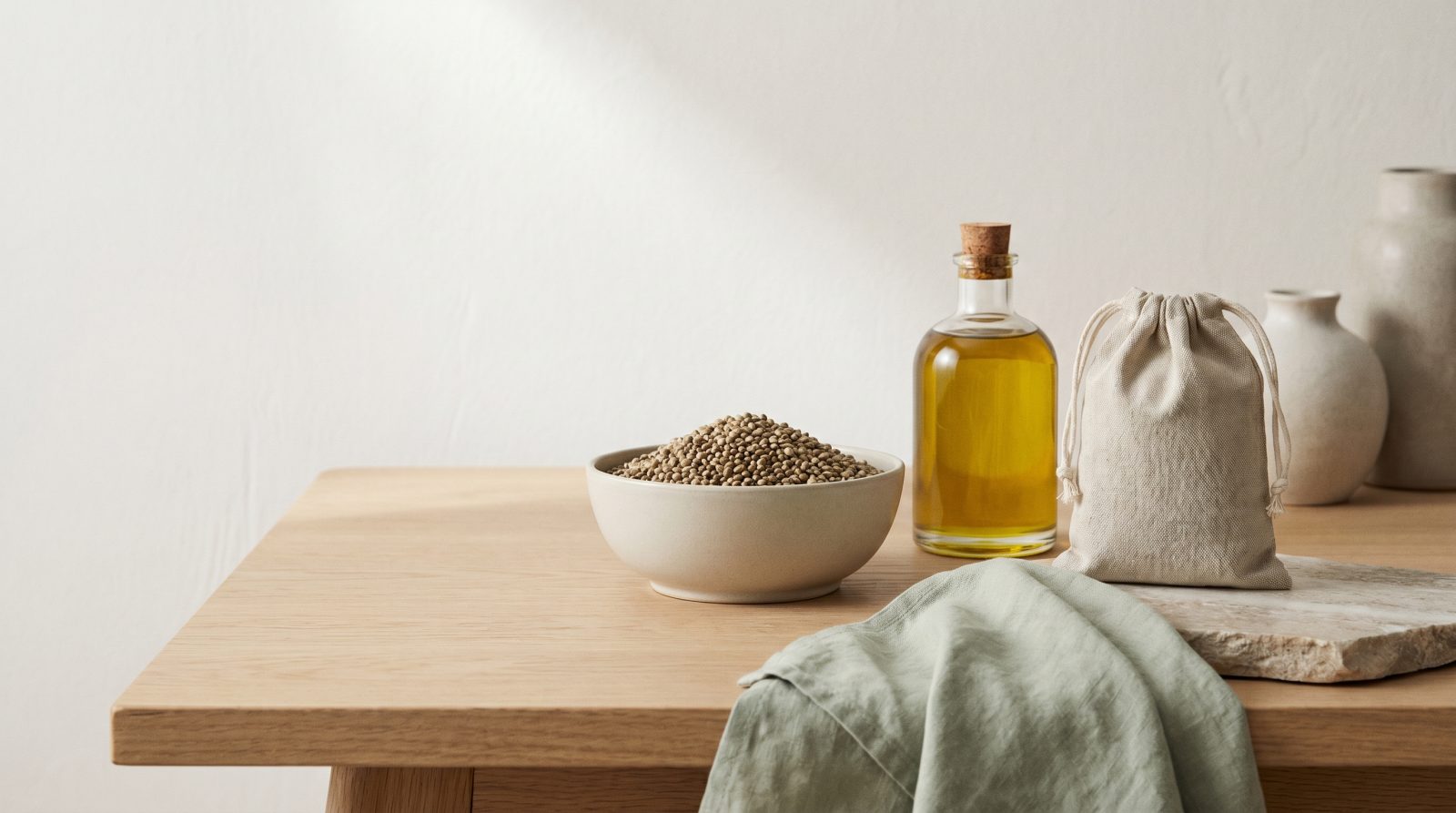
"Hemp food" covers any food product made from the seed of the hemp plant: whole hemp seed, hulled hemp seed (hemp hearts), hemp seed oil, hemp flour, and hemp protein powder. All five products come from the same seed; what separates them is simply how much of that seed each one keeps.
The five core hemp foods
- Whole hemp seed
- The intact seed with its crunchy outer shell. Higher in fibre than hulled seed, with a nuttier bite. Used in baking and sprouting. See our companion site on hemp seed for depth.
- Hulled hemp seed (hemp hearts)
- The soft inner kernel with the shell removed. Mild, nutty, no crunch. The most widely eaten hemp food, sprinkled on yogurt, salads, and bowls. Covered in detail at hulled hemp seed and shelled hemp seed.
- Hemp seed oil
- Cold-pressed oil from the seed. Green, nutty, rich in polyunsaturated fats. A finishing oil, not a cooking oil. Detailed at hemp oil.
- Hemp flour
- Milled from the seed cake left after oil pressing. High in protein and fibre, used to enrich baked goods. Detailed at hemp flour.
- Hemp protein powder
- A concentrated protein made from the milled seed cake. Used in smoothies and baking. Covered across the network including hemp protein bars.
What hemp food is not
This is the single most important distinction for new buyers:
- Hemp food is not marijuana. Hemp and marijuana are both Cannabis sativa, but hemp is a distinct agricultural variety bred for seed and fibre, containing negligible THC. Canada defines industrial hemp by its THC level in the growing plant (0.3 percent or less in the flowering heads and leaves); the separate 10 microgram per gram limit for hemp seed foods was removed in March 2025.
- Hemp food is not CBD. CBD comes from the flower and leaves and is regulated separately under the Cannabis Act. Hemp food comes from the seed and is regulated as ordinary food. Buying hemp hearts will not give you CBD, and CBD products are not sold as food in Canada.
- Hemp food will not make you high, and is very unlikely to make you fail a drug test, under normal consumption. The cannabinoid content is pharmacologically insignificant.
Why hemp became a mainstream food
Three things drove hemp from health-store curiosity to grocery-aisle staple:
- Nutrition: hemp seed is a complete plant protein with all nine essential amino acids, plus a balanced fat profile and meaningful fibre and minerals.
- Versatility: the mild, nutty flavour works in sweet and savoury dishes without dominating.
- Canadian supply: Canada is one of the world's largest hemp seed producers, concentrated in Manitoba, Saskatchewan, and Alberta, which gives the domestic market a reliable, traceable supply.
Where hemp foods fit in a normal diet
You do not need to overhaul your eating to use hemp foods. The most common entry points:
- A tablespoon or two of hemp hearts on breakfast yogurt or oatmeal
- Hemp seed oil whisked into salad dressing
- A scoop of hemp protein in a smoothie
- Hemp flour replacing 10-25% of regular flour in baking
- Hemp hearts blended into sauces, pestos, and dips for protein and creaminess
For tested recipes using each of these, see The Hemp Cookbook.
How to start
If you are new to hemp foods, hemp hearts are the easiest first purchase: no cooking, mild flavour, and they keep well refrigerated. From there, the rest of this site walks through shopping, legality, nutrition, safety, and the wider hemp food industry.