
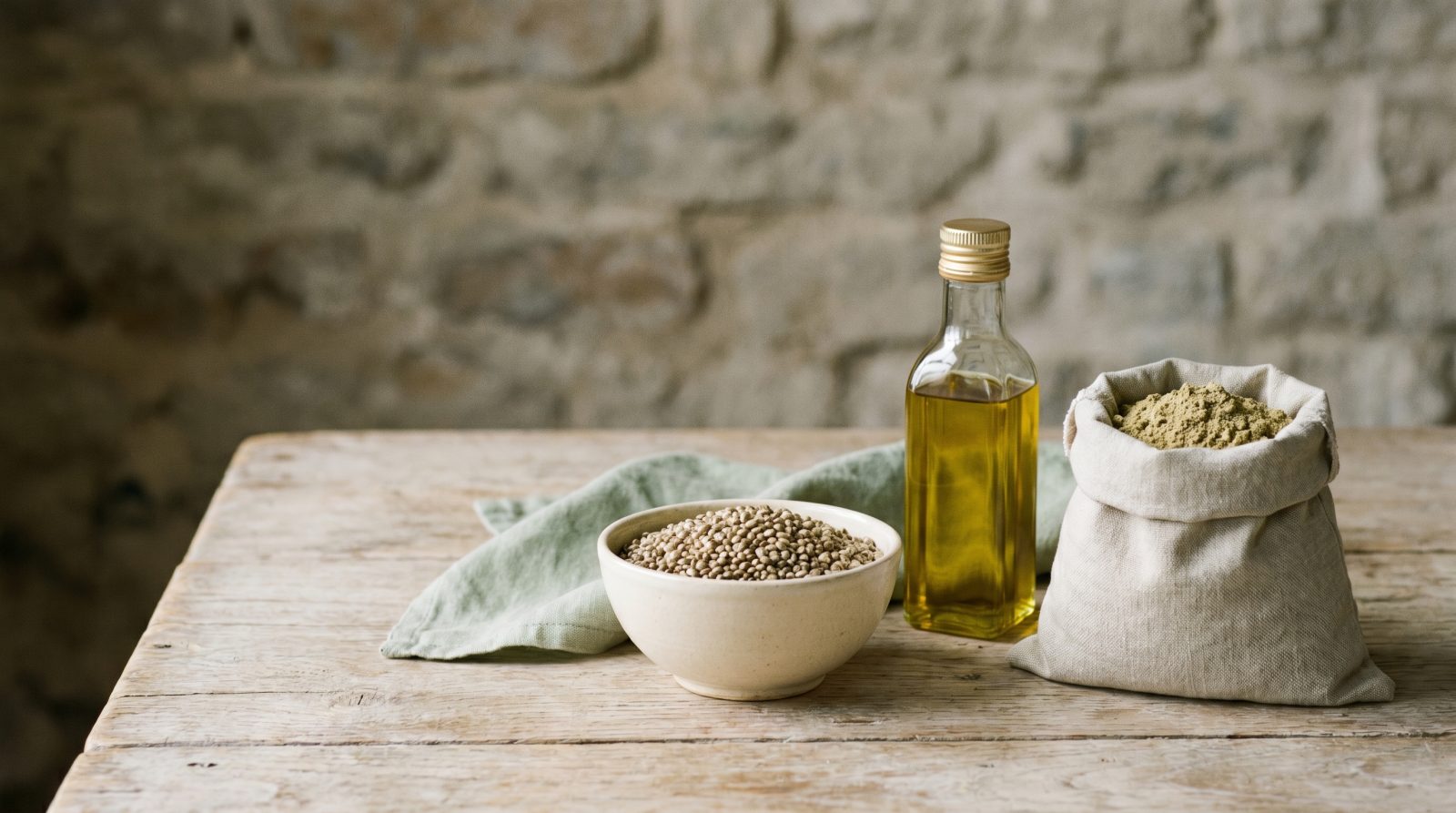
Hemp foods earned their place in the diet on nutrition, not novelty. This article gives the verified nutritional case for hemp as food: complete protein, balanced fats, fibre, and minerals, with the numbers and the honest limitations.
Complete plant protein
Hemp seed contains all nine essential amino acids, which is uncommon among plant foods. A 30 gram serving of hemp hearts provides about 10 grams of protein. The protein is built mostly from edestin and albumin, both highly digestible.
The honest limitation: hemp's protein quality score (PDCAAS about 0.49-0.53 for whole seed and 0.63-0.66 for hulled seed) is lower than animal proteins or soy, and its limiting amino acid is lysine. In a varied diet this is a non-issue; if hemp is your primary protein, pair it with lysine-rich legumes.
Balanced fats
About 75-80% of hemp seed's fat is polyunsaturated, with an omega-6 to omega-3 ratio of roughly 2.5:1 to 3:1. This is a moderate, favourable ratio compared to the typical Western diet's 15:1 or higher. Hemp also contains gamma-linolenic acid (GLA), an omega-6 derivative uncommon in other foods.
The honest limitation: hemp's omega-3 is alpha-linolenic acid (ALA), the plant form. The body converts only a small fraction of ALA to the long-chain EPA and DHA found in fish. Hemp is a good contributor to omega-3 intake, not a replacement for fatty fish or an algae supplement.
Fibre
Whole hemp seed is high in fibre; hulled hemp hearts retain less because the fibre-rich shell is removed. Hemp flour and hemp protein powder are high in fibre because they are made from the seed cake. A serving of hemp protein can deliver 5-12 grams of fibre, a meaningful contribution to the 25-38 gram daily target.
Minerals
Hemp foods are a strong source of several minerals, particularly:
- Magnesium: a 30 gram serving of hemp hearts provides roughly 210 mg, around half the daily requirement for many adults
- Iron: meaningful non-heme iron, better absorbed alongside vitamin C
- Zinc: a useful contribution to daily needs
- Phosphorus and potassium: both present in good amounts
How hemp compares to similar foods
| Per 30 g | Protein (g) | Omega-3 (g) | Fibre (g) | Notable |
|---|---|---|---|---|
| Hemp hearts | 9.5 | 2.6 | 1.2 | Complete protein, magnesium |
| Chia seeds | 5 | 5.0 | 10 | Very high omega-3 and fibre |
| Flaxseed (ground) | 5 | 6.4 | 8 | Highest omega-3, lignans |
| Almonds | 6 | 0 | 4 | Vitamin E, monounsaturated fat |
| Pumpkin seeds | 9 | 0.05 | 2 | Zinc, magnesium |
Hemp's distinct advantage is the combination: more usable protein than chia or flax, a complete amino acid profile, and balanced fats. For raw omega-3, flax and chia win; for protein-plus-fats in one food, hemp leads.
Who benefits most from hemp foods
- Plant-based eaters seeking complete protein without soy
- People avoiding common allergens (hemp is free of the top allergens)
- Anyone short on magnesium, which a large share of adults are
- People wanting to improve their omega-6 to omega-3 ratio by displacing refined seed oils
Realistic expectations
Hemp foods are a genuinely nutritious addition to a varied diet, not a cure for anything. The marketing around hemp sometimes overstates its effects. Treat it as what it is: a high-quality whole food that makes it easy to add complete protein, balanced fats, fibre, and minerals to everyday meals.
This is general nutrition information, not medical or dietary advice. Consult a registered dietitian or physician for guidance specific to your health.