
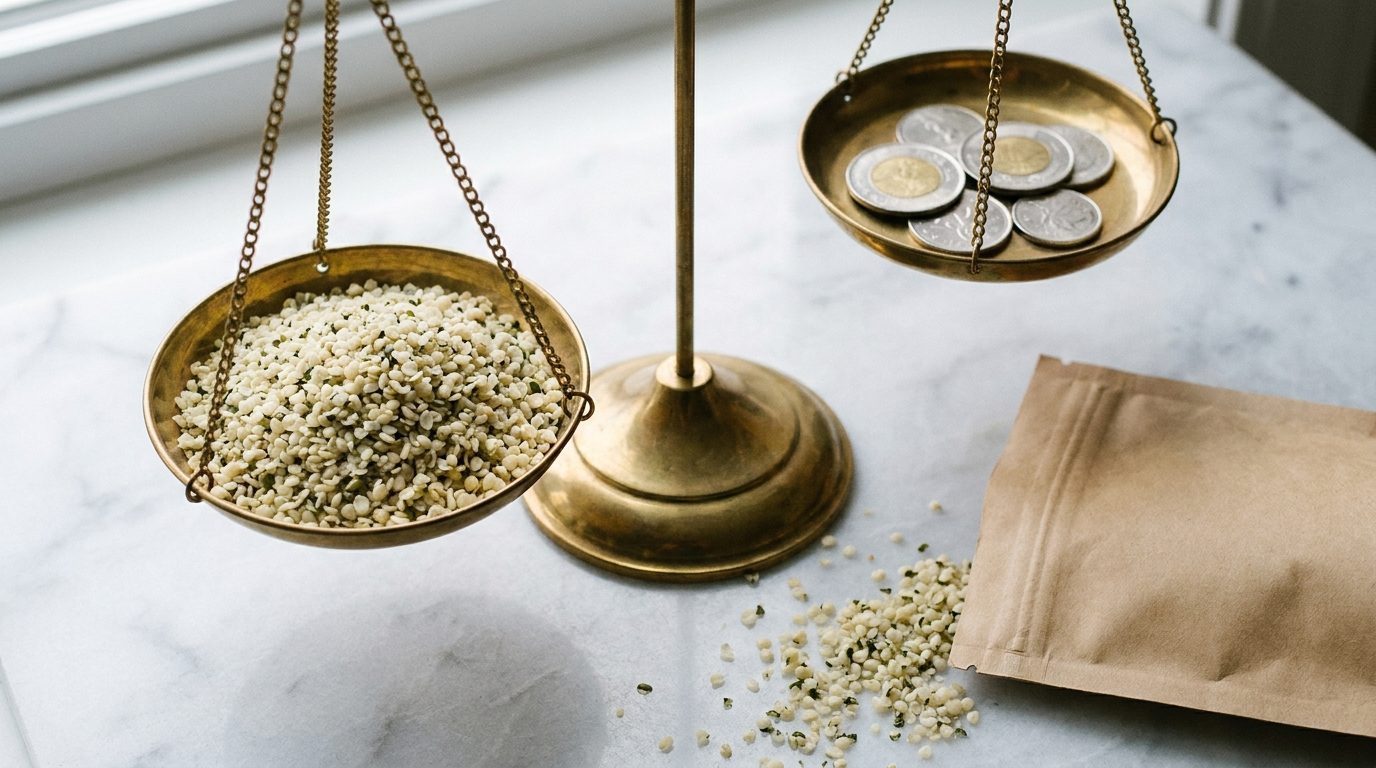
Hemp foods look expensive beside flour and oats and cheap beside protein supplements. Both impressions are correct, because the fair comparison is never the package price; it is the cost per gram of protein or per serving of what you are actually buying.
How to think about hemp prices
Hemp hearts at typical Canadian retail run somewhere between premium nuts and ordinary seeds per kilogram, with bulk and large-format purchases meaningfully cheaper per serving than small pouches. A standard 30 gram serving delivers about 10 grams of complete protein, which puts hemp's protein cost well below ready-to-drink shakes and bars, and above commodity staples like lentils and eggs. That is the honest position: hemp is a mid-priced protein with top-tier convenience and allergen advantages.
Where the price differences come from
- Format. Smaller packages can cost half again as much per kilogram as 1 kg or bulk formats of the identical product.
- Channel. Warehouse and bulk retailers undercut health stores substantially; producer-direct often beats both on larger formats once shipping is spread out.
- Organic certification. Expect a premium for certified organic across all hemp categories.
- Processing depth. Whole seed is cheapest, hearts cost more (dehulling), oil and high-protein powders cost the most per kilogram because each concentrates one fraction of the seed.
Paying less without losing quality
Buy hearts in the largest format you will finish within a couple of months of opening, and refrigerate after opening. Buy oil in small bottles regardless of unit price, because rancid savings are not savings. Watch warehouse-club rotations and stock up when hemp hearts appear. Treat protein powder grades carefully: a cheaper 50 percent protein powder can beat a dearer 70 percent one per protein gram, and the math takes ten seconds on a phone.
The bottom line
Price hemp per gram of protein or per daily serving and it sits comfortably in the middle of the protein market while carrying advantages most rivals lack: complete amino acids, no priority allergens, and kitchen versatility covered in how to use hemp foods every day.