
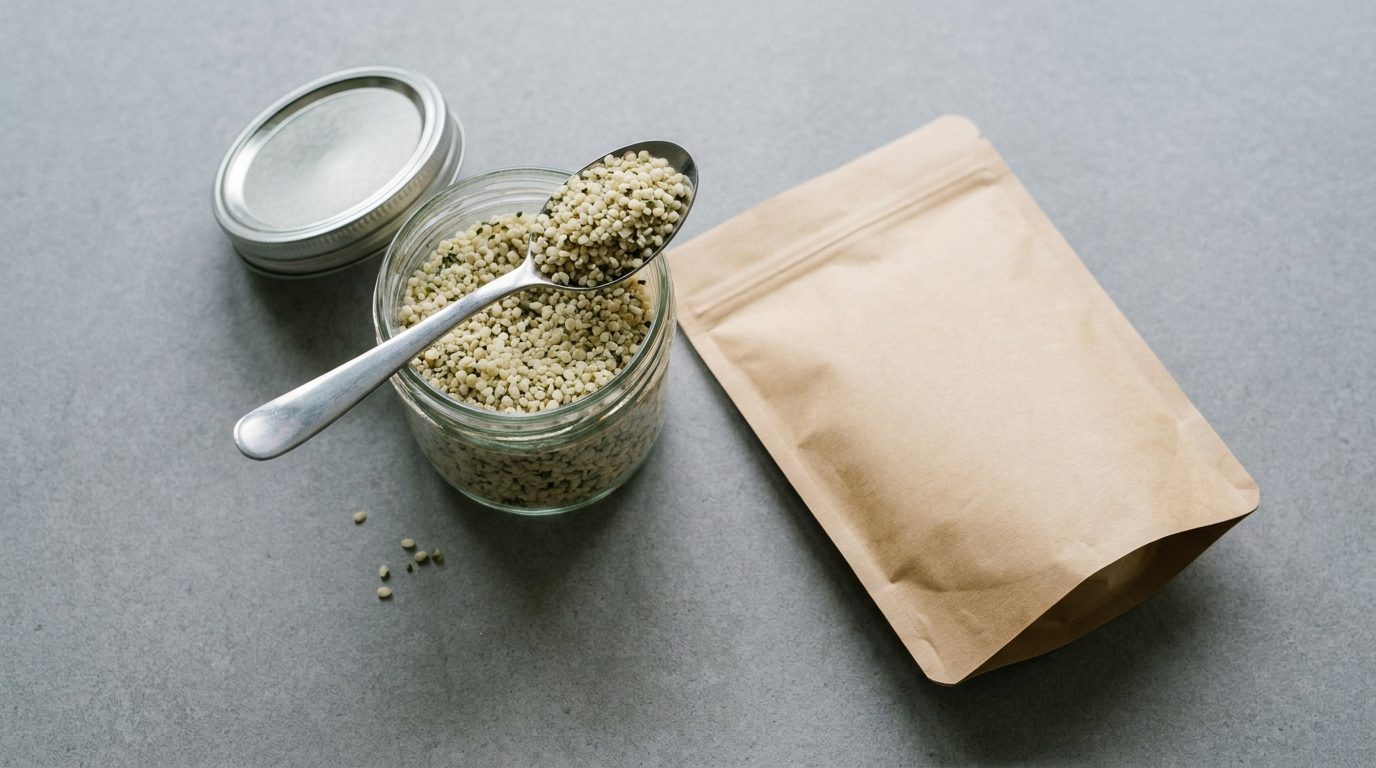
A bag of hemp hearts is regulated as food, not as cannabis. That single distinction determines almost everything a Canadian label is allowed to say — and quite a lot of what it is not.
Who actually regulates a bag of hemp hearts?
Two systems overlap. Health Canada administers the Industrial Hemp Regulations under the Cannabis Act, which govern who may grow hemp, which approved varieties they may plant, and the low THC limit the crop must meet. Once seed from a licensed crop is made non-viable and turned into a food product — hulled seed, seed oil, protein powder, hemp flour — it falls outside the Cannabis Act altogether and is treated as an ordinary food. Until March 2025 such products also had to contain no more than 10 micrograms of THC per gram; that limit was removed, and Health Canada's analysis said these products generally do not contain significant levels of cannabinoids.
From that point the applicable rules are the Food and Drugs Act, its regulations, and the Safe Food for Canadians Regulations, with the Canadian Food Inspection Agency as the main enforcement body. In practice that means the same labelling obligations as a bag of sunflower seeds: a common name, net quantity, a nutrition facts table, a full ingredient list, the name and address of the responsible party, and bilingual presentation of the mandatory elements.
Why you will never see CBD on a Canadian food label
Cannabidiol is a controlled substance in Canada and cannot lawfully be added to food. The hemp derivatives permitted in the food supply are seed-based, and seed-based products contain essentially no cannabinoids to begin with. A food package advertising CBD content, milligrams of cannabinoids, or “full spectrum” extract is either mislabelled or is not being sold legally as a food.
This is the single most common source of confusion in the category, and it cuts both ways. Shoppers looking for CBD sometimes buy hemp seed oil and are disappointed. Shoppers wary of cannabis sometimes avoid hemp hearts for no reason. The label wording is a reliable guide here: food-grade hemp products describe seed, not extract.
Nutrient content claims: why the wording is fixed
Phrases such as “source of fibre” or “source of omega-3 polyunsaturated fatty acids” are not marketing copy. They are nutrient content claims, drawn from a prescribed list, and each one carries a compositional condition the food must meet per stated serving. A manufacturer cannot invent an equivalent phrase that sounds similar but sidesteps the threshold.
Protein claims work differently again, and they surprise people. Canada assesses protein claims on protein quality, not protein quantity alone, which is why a product can be visibly high in protein and still not qualify for the strongest permitted wording. When a hemp label says less than you expect about protein, that is often the rules speaking rather than the product being weak.
Where a food claim becomes a drug claim
There is a hard line between describing a food's composition and implying it treats, prevents or mitigates a condition. Statements about reducing inflammation, improving joints, lowering cholesterol, or supporting a diagnosed condition push a product toward being regulated as a drug, which requires authorization it will not have. Only health claims that have been reviewed and permitted may appear on a food label.
This is where small brands most often get into difficulty, usually on the website rather than the package. Regulators treat marketing material connected to a product as part of its labelling, so a compliant bag paired with an expansive online claim is still a problem.
“THC-free” and other claims that invite trouble
Absolute negative claims are hard to substantiate, because analytical methods have detection limits and every result is really a statement about what a particular test could measure in a particular lot. Careful producers describe their controls instead: licensed seed supply, cleaning and dehulling that removes hull material, batch testing for THC with the results on file. “Organic” is a separate matter again; in Canada it is a regulated term, and using it in a claim requires certification rather than good intentions.
What to read first on a hemp package
Start with the common name, because hulled hemp seed, hemp protein powder and hemp flour are three genuinely different foods with very different nutrition profiles. Then read the ingredient list, which should be short and should not contain surprises. Then the serving size on the nutrition facts table, since comparing two products at different serving sizes is how most shoppers mislead themselves. Then the responsible party's name and address, and finally the date. If you want to work through your own cupboard with this in mind, the rest of our articles cover the products individually.
A compliant hemp label is deliberately boring. It names the food plainly, lists what is in it, gives you a nutrition facts table you can compare against anything else on the shelf, and makes no promises about your health. When a hemp package is doing something more exciting than that — cannabinoid numbers, therapeutic language, invented nutrient phrasing — treat the excitement itself as the warning sign, and buy the boring bag instead.